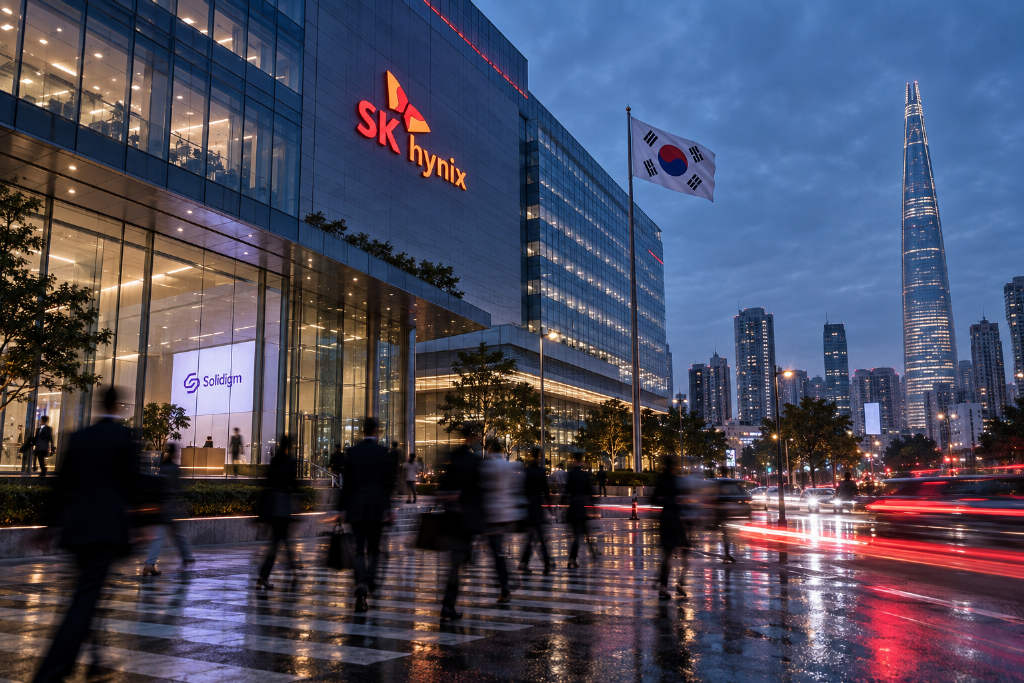
SK Hynix2026-09-28 07:06:22SK Hynix weighs U.S. IPO for Solidigm as ownership concerns hit Korean chip stocksSK Hynix is reviewing a potential U.S. initial public offering for its American NAND Flash subsidiary Solidigm, a move Bloomberg said could value the company at as much as $100 billion and come as early as next year. The report triggered a sharp market reaction in South Korea. SK Hynix fell 5%, marking its biggest one-day drop in nearly two weeks, while its largest shareholder SK Square dropped more than 8% and holding company SK Inc. lost more than 6%. The proposed listing has drawn scrutiny over the group’s layered ownership structure. The Korea Corporate Governance Forum said in August that SK Hynix should abandon the plan, arguing that Solidigm is held indirectly through the U.S. unit AI Company, making it a sub-subsidiary and deepening an already pyramid-style structure if listed separately. That has fueled concerns about duplicate listings and shareholder dilution. Jung In Yun, chief executive of Fibonacci Asset Management Global, said investors should stay cautious rather than panic. In his view, a U.S. listing could unlock Solidigm’s value and raise funds for capacity expansion, but existing SK Hynix shareholders would also give up part of the unit’s future earnings. He said the outcome depends on the final valuation and how the proceeds are used. Rising oil prices have also added pressure, pushing risk-off sentiment higher and weighing on Korean semiconductor names including Samsung Electronics.210
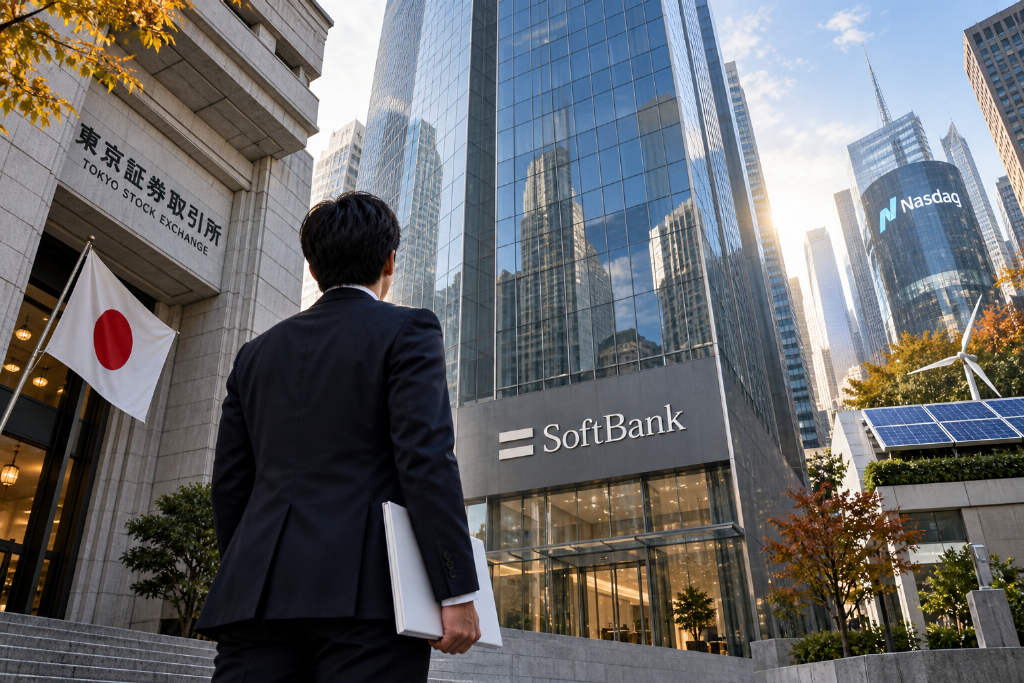
SoftBank2026-09-15 02:13:50SoftBank-backed SB Energy files Japan registration document for planned U.S. IPOSB Energy, a U.S. company under SoftBank Group, filed a domestic securities registration statement in Japan on Sept. 15 in connection with a planned initial public offering in the United States. The filing set the maximum fundraising amount in Japan at up to $500 million, or about 77 billion yen. The company expects to list on the Nasdaq market as early as September 2026. Its offering price and the number of shares to be sold have not been set. Provisional terms are expected to be disclosed sometime between September 2026 and February 2027. The update was reported by Nikkei and cited by Odaily.760
Gate Research2026-08-13 16:51:08Gate Research Institute Examines Whether Crypto Platforms Can Break IPO Allocation BarriersGate Research Institute has published a detailed study on crypto-based IPO Access products, arguing that the key question is not how much a stock rises on its debut, but how much of that return end investors can actually capture after allocations, fees, capital lockups, and exit timing are taken into account. The report maps the full financing-to-exit chain for traditional companies, then places crypto distribution models on top of that structure rather than treating them as a replacement for the conventional underwriting and custody system. The study separates the market into three product types: real IPO allocations, Pre-IPO private shares or SPV interests, and structured Pre-IPO tokens such as Mirror Notes that do not grant direct equity ownership. It also distinguishes between Gate’s IPO Access product, which routes successful allocations into a Gate Stock account, and Gate Pre-IPOs, where products like the OPENAI Asset Certificate represent contingent payout structures instead of actual OpenAI shares. Using a unified SpaceX scenario, the report compares a traditional broker channel with Gate’s IPO Access model. With a $13,500 subscription, a 3% allocation rate, a 3-day capital freeze, and a first-day close of $160.95 versus a $135 offering price, the report calculates a net return of about 0.54% for the traditional broker and 0.39% for Gate after a 5% subscription fee on allocated shares. The conclusion is direct: the core competitive variable in IPO Access is access to real allocation, not the headline first-day gain alone.1440
Kraken2026-07-24 06:00:16Kraken Launches xStocks Allowing Retail Investors to Buy US IPOs at Issue PriceKraken's Payward Services introduces xStocks, enabling global retail investors to subscribe to tokenized US IPO shares at the same price as institutions, breaking traditional barriers. xStocks has surpassed $30B in total volume.710
Maya2026-07-24 01:20:16Philippine Digital Bank Maya Eyes US IPO at $1 Billion ValuationMaya is exploring a US IPO at a valuation of up to $1 billion. Its regulated in-app crypto trading feature gives it a clear edge, but may also invite added scrutiny during the listing process.450
US IPO2026-07-23 18:15:16US IPO Volume Hits $120 Billion in H1 2026, But Crypto Companies Pull BackGoldman Sachs reports $120 billion in US IPO proceeds by mid-2026, matching 2021's record pace. However, crypto firms like Kraken, Consensys, and Grayscale have delayed their listing plans amid market uncertainty.540
SpaceX2026-06-20 08:00:50Retail Buying, Raised Expectations and Gamma-Squeeze Talk Drive SPCX After SpaceX’s IPOAfter closing its first trading day at $160.95 and a $2.1 trillion valuation, SPCX surged 19.6% on Monday to $192.5, lifting SpaceX’s market value to $2.519 trillion. Retail flows, the greenshoe option, institutional targets and options-market discussion are shaping the stock’s next chapter.2070
SpaceX2026-06-20 00:00:50SPCX Jumps 19.6% as Retail Buying, Greenshoe Demand and Institutional Views Lift SpaceX NarrativeAfter SpaceX closed its first trading day at $160.95 with a $2.1 trillion valuation, SPCX surged 19.6% on Monday to $192.5. Retail inflows, a greenshoe exercise, macro news and investor commentary are shaping the next phase of the trade.2040